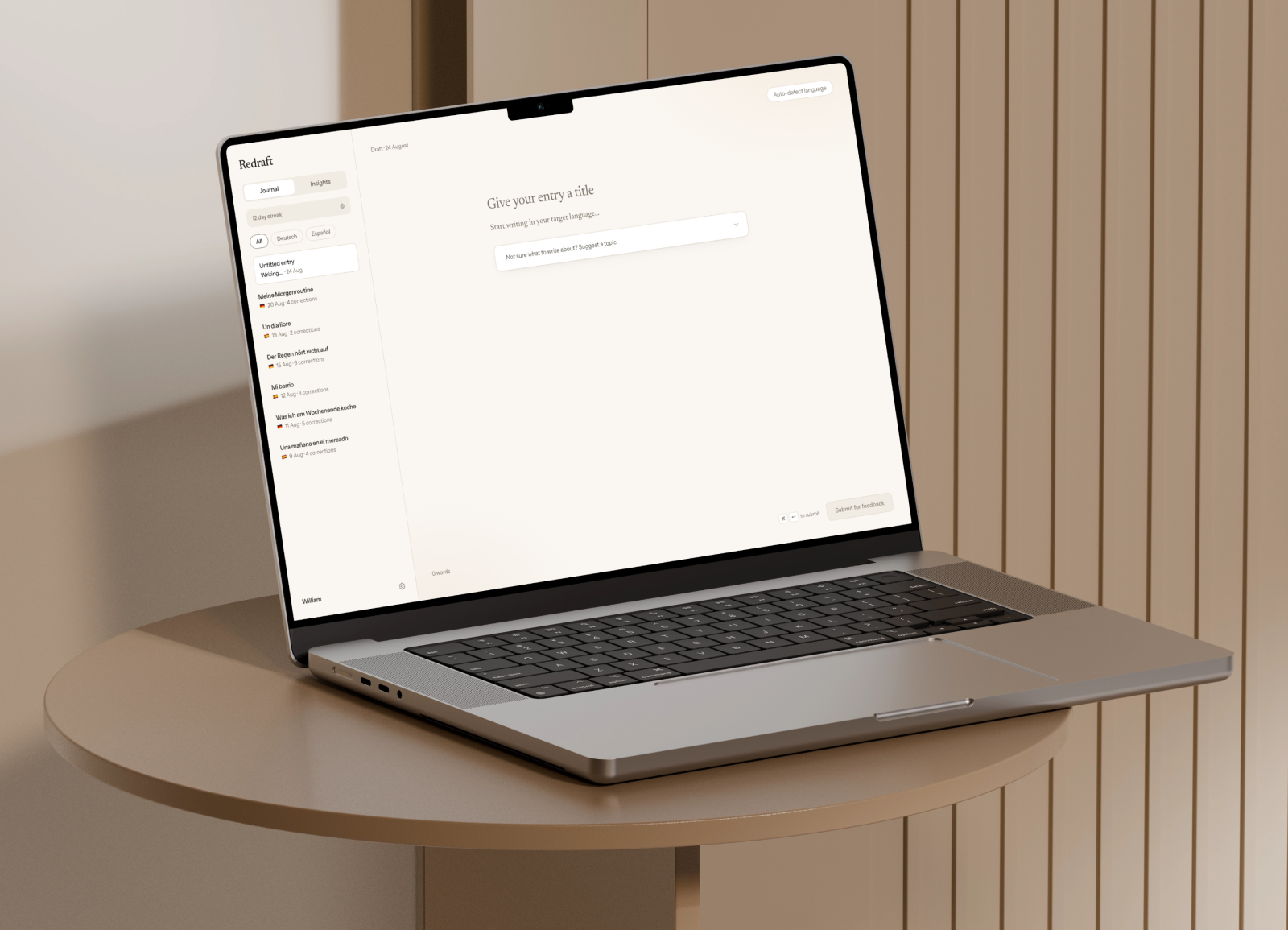
Redraft is a product design exercise for self-directed language learners. It gives feedback on each journal entry, then finds patterns across them.
Finding the real problem
Most language apps teach recognition. They rarely ask learners to produce language freely. This forced recall is often considered to be where the real learning occurs.
I focused on intermediate learners studying without a teacher, much like myself learning German. At this level, the problem is not a lack of lessons, but rather not knowing which mistakes you keep making.
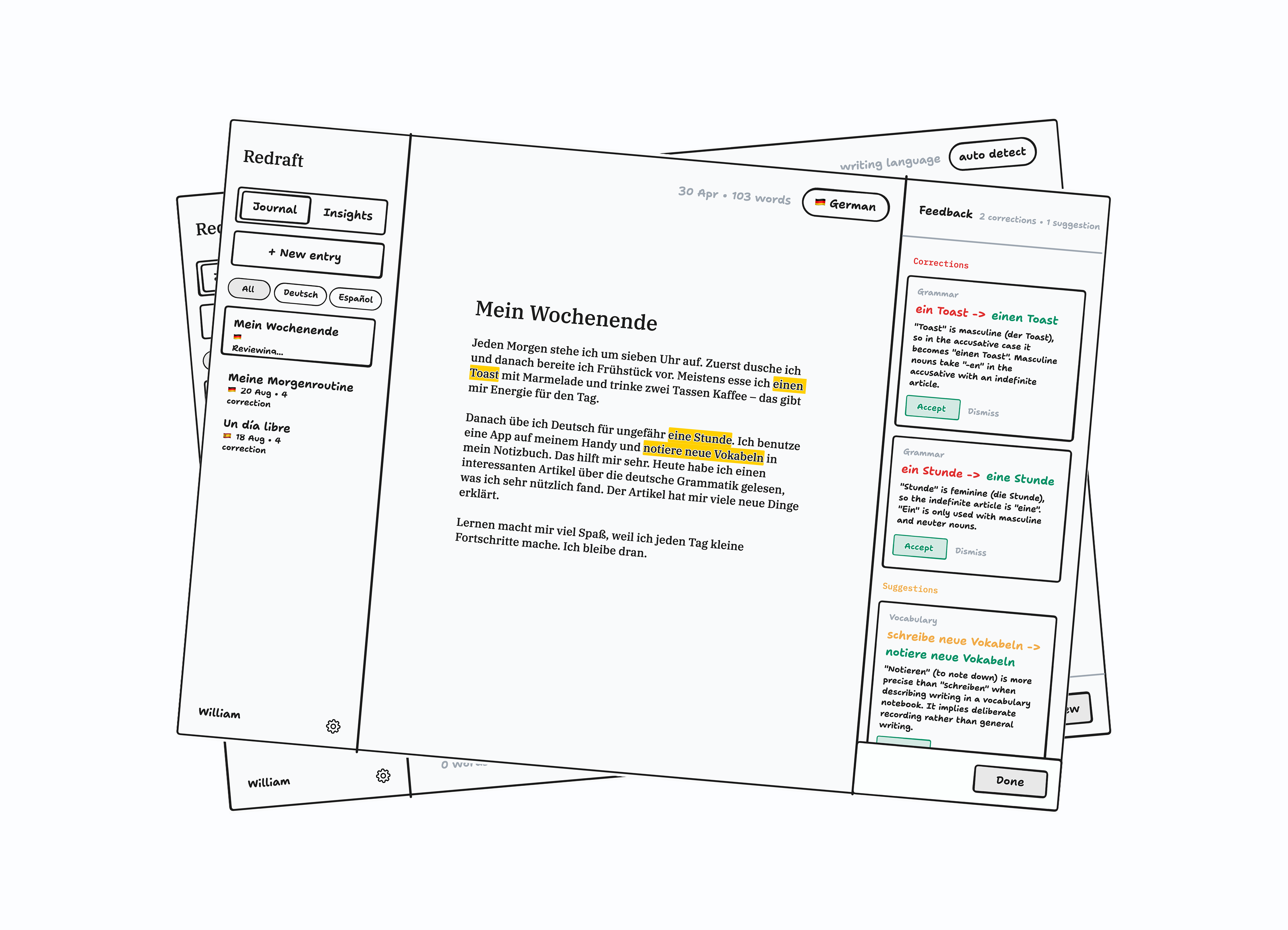
My early sketches explored a simple loop: write, review, understand, then practise again.
Making it easier to start
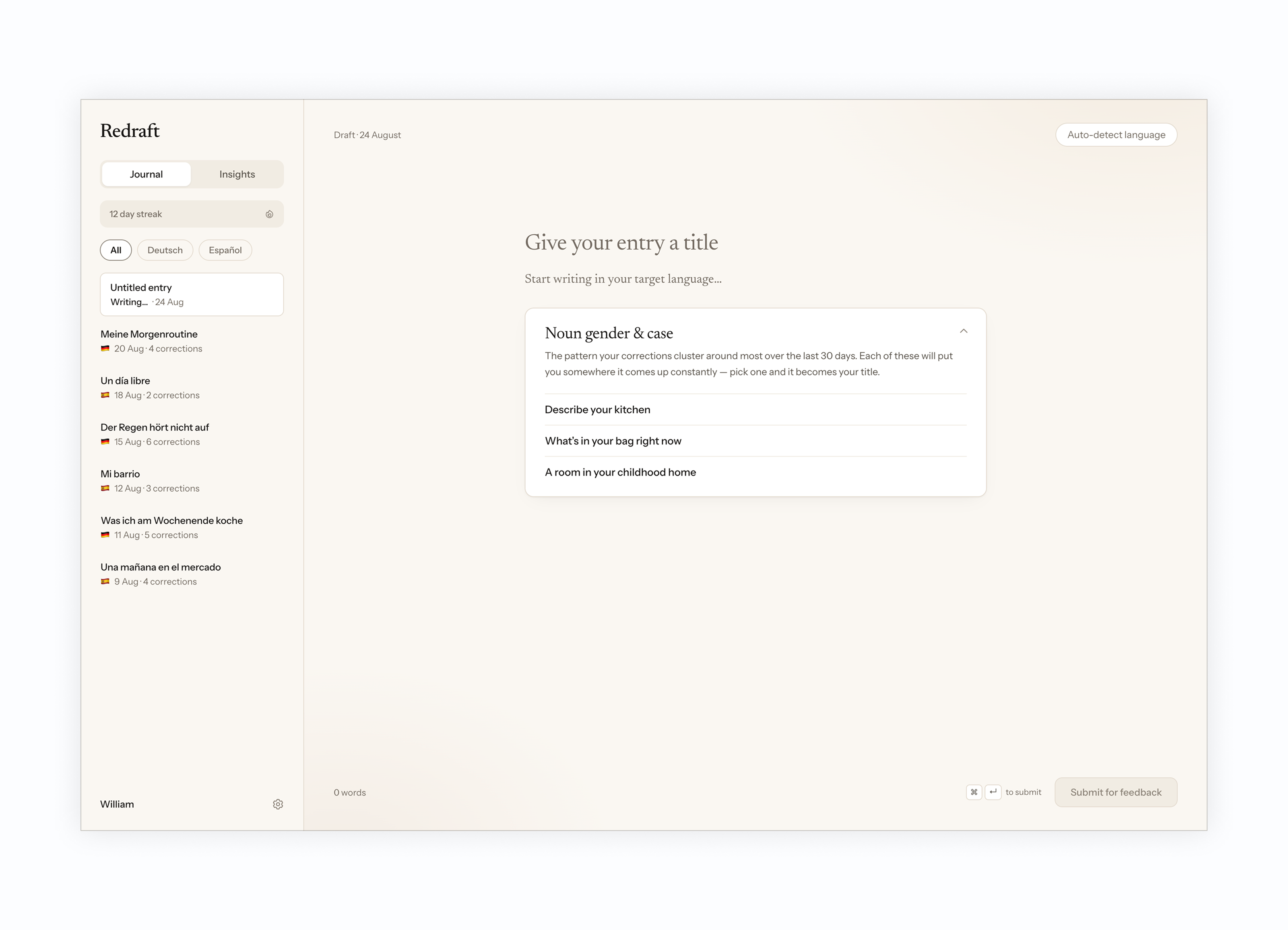
Free writing can be hard to sustain. A blank page makes it even harder.
Redraft suggests topics based on the learner's weak areas. This makes each entry easier to start and more useful as practice.
Giving useful feedback
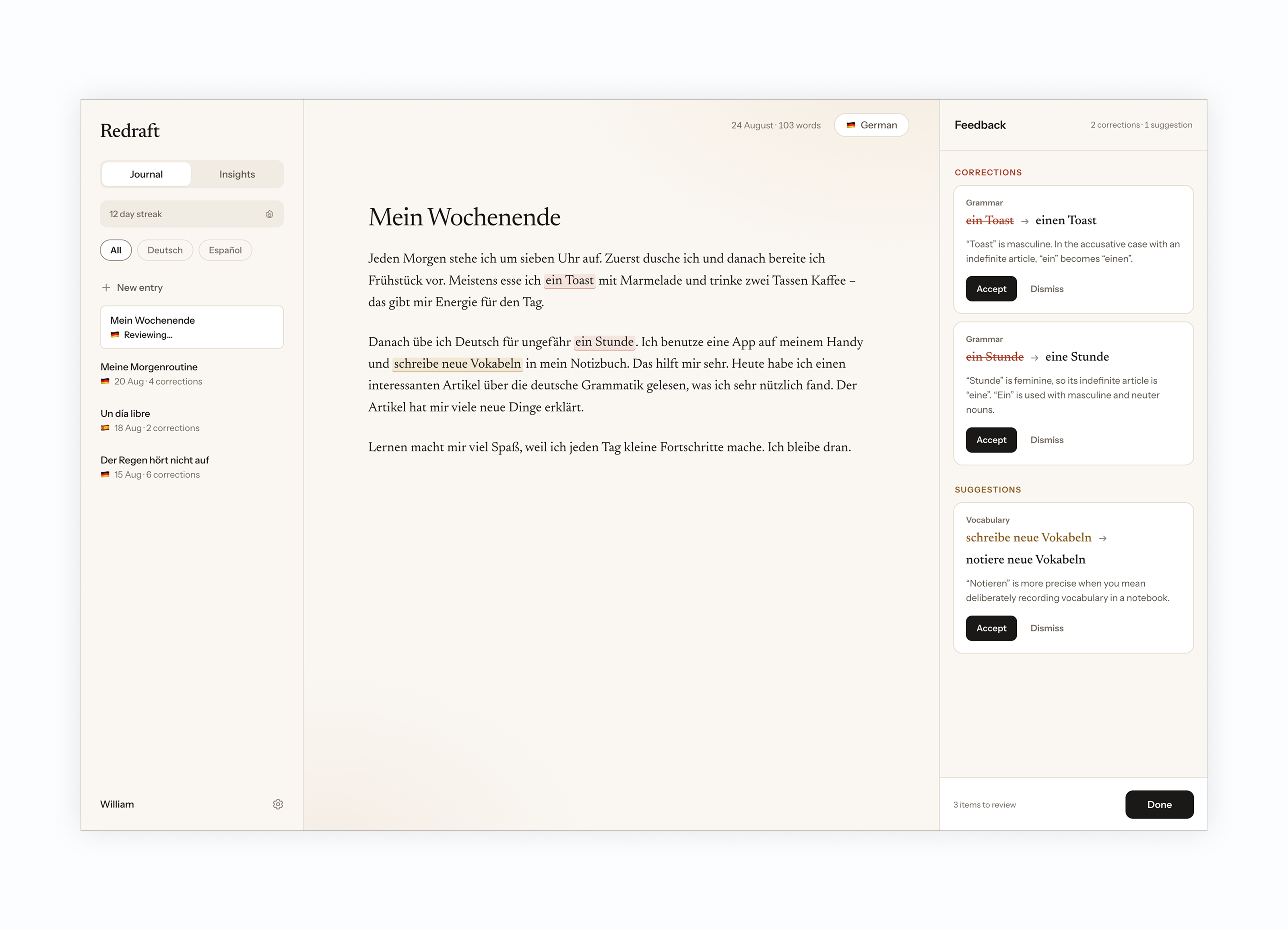
Learners write first and review afterwards. This keeps corrections from interrupting their train of thought.
Feedback is split into corrections and suggestions. Required changes stay separate from optional improvements. Each item can be accepted or dismissed.
Turning mistakes into a plan
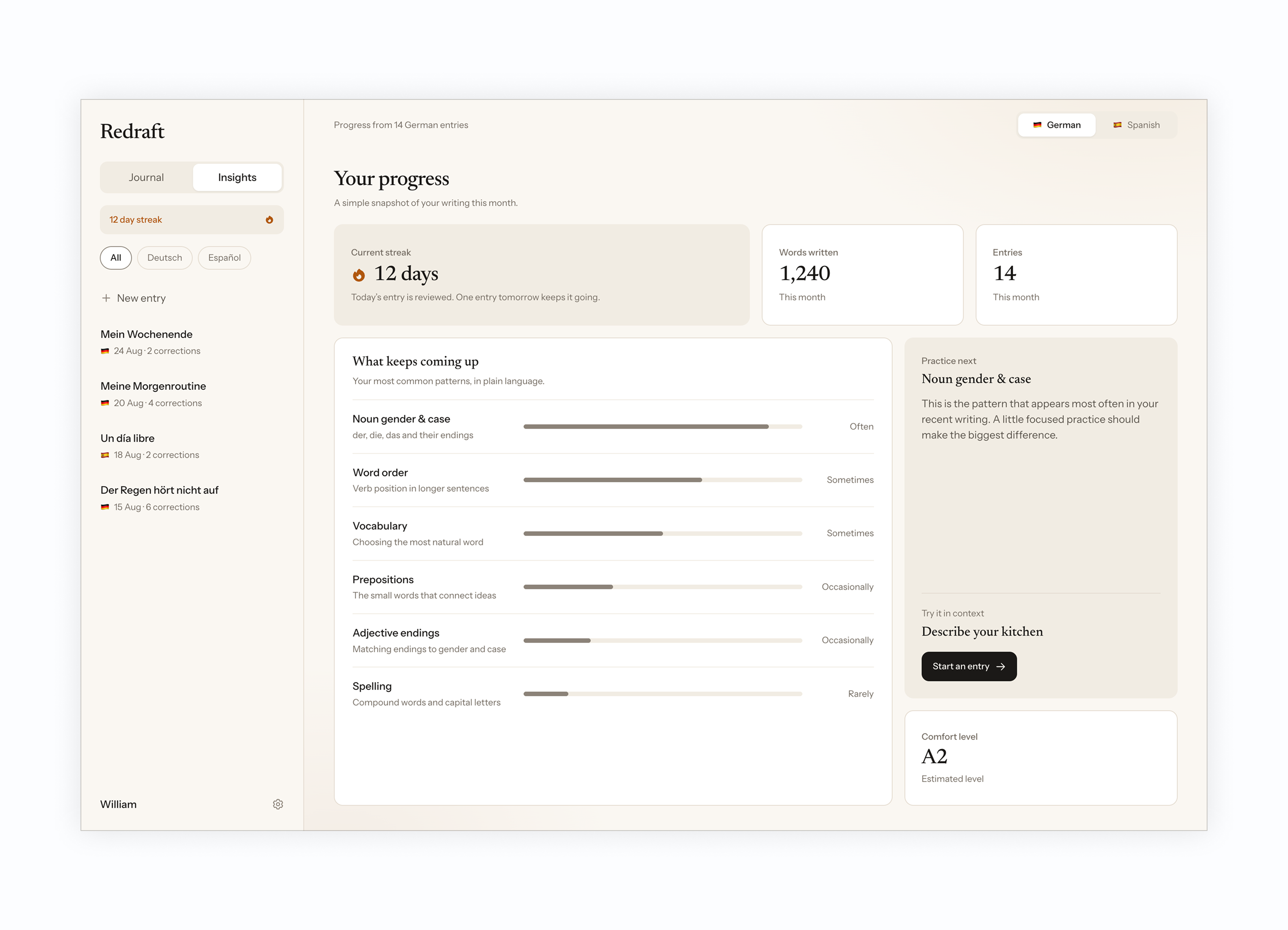
One corrected entry is useful. Patterns across many entries are more valuable.
The insights page tracks errors per 1,000 words, so longer entries do not distort the results. It highlights a weak area and gives the learner one clear next step: write another entry focused on it.
What I would test next
I would test whether tailored topics actually help more learners finish an entry. I would also track dismissed corrections, since confident-but-incorrect AI feedback could teach the wrong thing.
References
- Solving Product Design Exercises. Book by Artiom Dashinsky.